
The publication of the Home Office’s Terrorism (Protection of Premises) Act 2025 Statutory Guidance on 15th April 2026 marks the formal shift in...
2021 Events
Readiness and Control in an Ever Changing Event Landscape

As live events returned following COVID restrictions, readiness, exercising and operational control became more important than ever for safe and successful event delivery.
In 60 seconds
The events industry faced unprecedented disruption during the pandemic, forcing organisers to cancel, postpone or virtualise events. As live events returned, the focus shifted toward readiness, exercising and operational resilience. Successful events now rely on planning, testing, collaboration and adaptable control room operations to manage evolving risks and ensure safe delivery.Who this is for
Event Organisers, Event Managers, Venue Operators, Safety Teams, Security Teams, Local Authorities, Multi Agency Partners, Sports Event Organisers and organisations responsible for planning and delivering live events.
What the guidance and good practice says
An Industry Forced to Pause
The events industry experienced one of the most difficult periods in its history during the COVID pandemic.
For many organisers, there were only three options available:
- Cancel events
- Postpone delivery
- Move to virtual formats
For many high profile and large scale events, virtual alternatives were not realistic due to live audiences, multiple locations, operational complexity and the importance of in person participation.
The Return of Live Events
As restrictions eased, live events gradually returned.
The return highlighted the importance of operational readiness, resilience and adaptable event control arrangements.
Organisers were no longer planning only for traditional risks. They also needed to consider changing public health guidance, workforce challenges and evolving operational pressures.
The Importance of Readiness
Successful events rely on preparation long before event day.
Organising live events requires coordination between multiple teams, suppliers and agencies while managing dynamic and sometimes unpredictable risks.
Examples of risks that organisers must consider include:
- Adverse weather conditions
- Counter terrorism risks
- Drone related disruption
- Crowd safety challenges
- Transport disruption
- Communications failures
- Medical incidents
Practice Improves Performance
One of the most valuable lessons from major events is that preparation improves operational performance.
Just as athletes rehearse before competition, event teams benefit from practising their roles, decision making and communication arrangements.
Readiness activities may include:
- Scenario walkthroughs
- Tabletop exercises
- Operational drills
- Control room rehearsals
- Supplier coordination sessions
- Incident management simulations
These activities improve confidence, coordination and response effectiveness during live operations.
Integrated Event Control
Modern event delivery increasingly depends on effective event control functions.
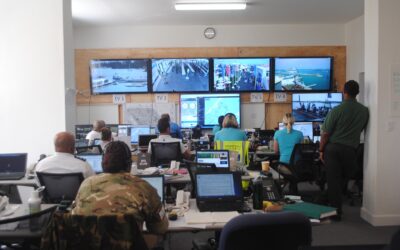
Control rooms support:
- Situational awareness
- Incident management
- Communication coordination
- Decision making
- Information management
- Multi agency collaboration
Control arrangements must remain flexible enough to support both planned operations and unexpected disruption.
The Rise of Remote Event Control
Recent years have accelerated the development of remote and hybrid control room models.
Remote event control capabilities allow operational teams to support events across multiple locations while maintaining oversight, communication and coordination.
This approach has already been used successfully across sporting events, national events and multi location operations.
Readiness Through Training and Exercising
Training and exercising remain central to safe event delivery.
Effective readiness programmes help organisations:
- Validate plans and procedures
- Identify gaps before event day
- Improve inter-team coordination
- Strengthen communication pathways
- Build confidence and competence
- Prepare for high pressure decision making
The most resilient events are rarely the ones with the biggest plans. They are the ones with teams that have rehearsed how to work together under pressure.
What good looks like
- Event risks identified and reviewed early
- Operational plans validated before delivery
- Control room arrangements tested in advance
- Teams and suppliers trained together
- Clear communication and escalation structures
- Scenario based exercising delivered regularly
- Remote and on site operations integrated effectively
- Incident response roles clearly understood
- Lessons captured after each event
- Continuous improvement embedded into operations
Common mistakes we see
Assuming plans alone are enough
Even detailed plans can fail if teams have not rehearsed how to apply them during live operations.
Leaving exercising too late
Exercises should happen early enough for organisations to correct issues before event delivery.
Working in operational silos
Control rooms and event teams perform best when suppliers, partners and agencies train together.
Underestimating evolving risks
Modern events must prepare for changing operational risks, not just traditional event safety concerns.
Ignoring communications pressure
During incidents, information flow and coordination often become more challenging than the incident itself.
Practical checklist
Event Readiness Checklist
- Review operational and safety risks
- Validate event control arrangements
- Confirm communication structures
- Run scenario based exercises
- Brief suppliers and delivery partners
- Test escalation procedures
- Prepare contingency arrangements
- Review staffing and welfare plans
- Ensure documentation is accessible
- Capture lessons after the event
FAQs
Why is event readiness important?
Readiness helps event teams prepare for disruption, coordinate effectively and respond safely under pressure.
What is an event control room?
An event control room is the operational hub used to coordinate communications, monitor incidents and support decision making during an event.
What types of exercises should event teams run?
Event teams should use tabletop exercises, live drills, communication tests and scenario walkthroughs to validate plans and team coordination.
Why are remote control rooms becoming more common?
Remote control arrangements provide operational flexibility and allow support across multiple events and locations while maintaining situational awareness.
How often should readiness exercises take place?
Exercises should take place regularly before major events and whenever significant operational changes occur.
Controlled Events supports organisers, venues and delivery partners with readiness planning, exercising and event control operations tailored to live event environments.
From control room operations and exercising through to remote event support and operational readiness, we help teams prepare confidently for modern event delivery.
If you are planning an upcoming event or series and want to strengthen your operational readiness, please contact the team to discuss how we can support your event operations.