
The publication of the Home Office’s Terrorism (Protection of Premises) Act 2025 Statutory Guidance on 15th April 2026 marks the formal shift in...
Crisis Management Readiness
Crisis Management: Preparing Your Team to Thrive in the Face of Disaster

A crisis does not wait for perfect conditions. Organisations need practical plans, trained people and tested response arrangements before disruption happens.
In 60 seconds
Many organisations focus on growth, operations and customer demand, but neglect the crisis management and business continuity arrangements needed when things go wrong. Effective crisis readiness requires practical plans, accessible tools, trained teams and realistic simulations. By combining good practice, business specific planning and hands on exercising, organisations can improve confidence, competence and recovery during disruption.Who this is for
Senior Leaders, Business Owners, Crisis Management Teams, Business Continuity Managers, Operational Resilience Leads, Risk Managers, Facilities Managers, HR Teams, Communications Teams and organisations wanting to improve their ability to respond to disruption.
What the guidance and good practice says
How Will Your Organisation Respond to a Crisis?
Every senior manager and executive should be able to answer this question clearly.
Disruption can come from many sources including cyber attacks, flooding, fires, fuel disruption, protest activity, supply chain failure, terrorism, pandemics or reputational incidents.
Many organisations focus naturally on Plan A: sustaining customer demand, growing the business, remaining competitive and finding new opportunities.
However, crisis management and business continuity arrangements are what enable organisations to respond effectively when Plan A is disrupted.
The Risk of Being Caught Off Guard
When organisations are not prepared, incidents can quickly create operational, regulatory, financial and reputational damage.
Some businesses never fully recover from major disruption.
The issue is rarely just the incident itself. It is often the lack of clear plans, trained people, accessible tools and tested procedures that causes the response to become slower, less coordinated and less effective.
Practical Plans Over Long Manuals
Generic emergency preparedness manuals are often too long, too theoretical and too difficult to use during a real incident.
Effective crisis arrangements should be practical, accessible and tailored to how the organisation actually operates.
Teams should not be expected to memorise hundreds of pages of procedures.
They need clear tools, role based guidance, scenario playbooks and response structures that can be used quickly under pressure.
The Role of Training and Muscle Memory
Crisis response improves when teams have rehearsed their roles and decisions before a real incident occurs.
Training and simulation exercises build muscle memory, confidence and competence.
This helps teams respond more consistently to natural hazards, malicious threats and operational disruption.
Prepared teams are more likely to communicate clearly, escalate effectively and maintain control during uncertainty.
Using Technology to Support Crisis Planning
Technology can support the development, maintenance and live use of crisis management and business continuity arrangements.
Planning platforms can help organisations manage documents, procedures, playbooks and access to critical information.
For organisations that do not require a full suite of detailed plans, scenario specific playbooks can provide a practical and proportionate approach.
These playbooks can cover common consequences of disruption, specific sites, operational risks or high priority scenarios.
Simulation and Experiential Learning
Hands on experience is often more effective than theory alone.
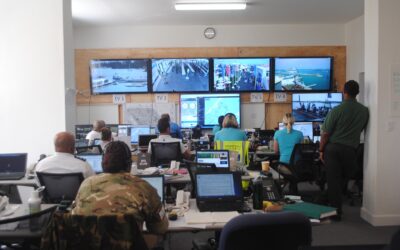
Interactive crisis simulations allow participants to experience pressure, ambiguity, decision making and information flow in a realistic but controlled environment.
This style of exercising helps teams engage more deeply than traditional presentation based training.
Role play, smartphone participation, realistic injects and virtual simulation environments can all help create a memorable and practical learning experience.
Testing Real Crisis Scenarios
Simulation exercises can be designed around scenarios such as:
- Ransomware attacks
- Security incidents
- Reputational crises
- Supply chain disruption
- Loss of premises
- Major service disruption
- Flooding or severe weather
- Public safety incidents
The aim is not to catch teams out, but to help them understand how they operate under pressure and where improvements are needed.
Building a More Resilient Business
Effective crisis management combines plans, people, technology and exercising.
Organisations that invest in readiness are better placed to protect staff, maintain operations, communicate with stakeholders and recover quickly.
The strongest crisis management arrangements are not theoretical. They are understood, accessible, rehearsed and embedded across the organisation.
What good looks like
- Clear crisis management and business continuity plans
- Practical playbooks for priority scenarios
- Accessible tools and response information
- Defined roles, responsibilities and escalation routes
- Teams trained before incidents occur
- Simulation exercises delivered regularly
- Senior leaders involved in crisis response training
- Technology used to support planning and live response
- Lessons captured and fed into continual improvement
- Confidence, competence and coordination strengthened before disruption
Common mistakes we see
Focusing only on normal operations
Growth and day to day delivery matter, but organisations also need arrangements for when normal operations are disrupted.
Relying on generic manuals
Long, generic documents are rarely useful during fast moving incidents if teams cannot access or apply them quickly.
Not training the people expected to respond
Plans only work if the people responsible for delivering them understand their roles and have practised them.
Using theory without simulation
Classroom based awareness is useful, but teams also need realistic experience of decision making under pressure.
Ignoring scenario specific risks
Different organisations face different risks, so playbooks and exercises should reflect the real operating environment.
Failing to capture lessons
Exercises and incidents should produce clear learning, action tracking and improvement.
Practical checklist
Crisis Management Foundations
- Identify priority risks and disruption scenarios
- Review existing crisis and continuity plans
- Define roles and escalation routes
- Prepare practical response playbooks
- Confirm access to key contacts and procedures
- Ensure plans are accessible during disruption
Training and Exercising
- Deliver role based crisis management training
- Run realistic simulation exercises
- Include senior decision makers
- Test communication and escalation pathways
- Use scenarios relevant to the organisation
- Capture decisions, lessons and improvement actions
Technology and Tools
- Use platforms to manage plans and procedures
- Maintain scenario playbooks
- Support live access to response information
- Consider interactive simulation tools
- Review how technology supports response and recovery
FAQs
Why is crisis management important?
Crisis management helps organisations respond quickly, protect people, maintain operations and recover more effectively during serious disruption.
What is the difference between crisis management and business continuity?
Crisis management focuses on leadership, coordination and decision making during serious incidents. Business continuity focuses on maintaining and recovering critical operations.
Why are generic emergency manuals not enough?
Generic manuals may be too long or theoretical to use effectively during fast moving incidents. Teams need practical, accessible and tailored guidance.
What is a crisis playbook?
A crisis playbook is a practical guide that supports response to specific disruption scenarios or consequences.
Why are simulations useful?
Simulations allow teams to practise decision making, communication and escalation in realistic conditions before a real crisis occurs.
Who should take part in crisis exercises?
Participants should include senior leaders, operational managers, communications teams, HR, facilities, IT, risk teams and other people with crisis response responsibilities.
How often should crisis arrangements be tested?
They should be tested regularly and whenever there are significant changes to risks, people, sites, systems or operating models.
Controlled Events supports organisations in developing practical crisis management, business continuity and readiness arrangements tailored to real operational risks.
Through planning, playbooks, technology supported exercising and interactive simulations, we help teams build confidence, competence and response capability before disruption occurs.
If your organisation wants to strengthen its crisis readiness, please contact the team to discuss how we can support your planning, training and exercising.