
The publication of the Home Office’s Terrorism (Protection of Premises) Act 2025 Statutory Guidance on 15th April 2026 marks the formal shift in...
Innovations in Exercising
Unlocking Collaboration and Readiness for Tomorrow’s Challenges
Exercises should do more than tick a compliance box. The most effective organisations use exercising to build trust, test assumptions, strengthen decision making and improve resilience before pressure arrives.
In 60 seconds
Modern exercising is no longer about running occasional tabletop sessions in isolation. Organisations are facing increasingly complex and overlapping risks that demand collaboration, adaptability and continual learning. Drawing on lessons from major UK events and emergency responses, this article explores how exercising can evolve into an ongoing programme that strengthens communication, interoperability, leadership and operational readiness across teams and agencies.Who this is for
Emergency Planners, Resilience Leads, Control Room Managers, Event Professionals, Security Teams, Local Authorities, Business Continuity Leads, Multi Agency Partners and organisations responsible for crisis preparedness and operational coordination.
What the guidance and good practice says
The Need for Innovation in Training
In an age of TUNA risks where uncertainty, complexity and disruption are becoming everyday realities, the ability to train, exercise and evaluate resilience has never been more important.
Major incidents and large scale operations do not simply test organisations. They expose strengths, weaknesses, assumptions and relationships under pressure.
Experiences ranging from the London 2012 Olympic and Paralympic Games to Covid-19 responses, major fires, national ceremonies and public events have shown that resilience cannot rely on isolated one-off exercises.
Readiness must instead become an ongoing programme that builds capability, adaptability and confidence over time.
The Challenges of Multi Agency Exercising
Anyone involved in cross organisational exercising understands the challenges that can emerge.
- Siloed expertise and competing priorities
- “Not invented here” attitudes
- Resource and budget limitations
- Different organisational cultures and terminology
- Reluctance to share information openly
- Complacency and optimism bias
These factors can undermine even well intentioned exercises if they are not recognised early.
Successful exercising therefore requires more than simply delivering a scenario. It requires trust building, stakeholder engagement and a shared understanding of purpose.
Building Shared Objectives
The strongest exercising programmes begin with clarity.
Teams that establish shared objectives, shared values and common operating expectations create stronger interoperability and more meaningful outcomes.
Early engagement with stakeholders helps identify:
- Desired outcomes
- Operational risks
- Decision making thresholds
- Dependencies and vulnerabilities
- Areas requiring reassurance or testing
Sequence planning is also essential. Organisations should gradually build knowledge and confidence over time rather than exposing teams to entirely unfamiliar concepts or environments without preparation.
Exercises Should Reflect Reality
Effective exercises balance structured objectives with realistic and dynamic play.
Some elements may be scripted to ensure key learning objectives are achieved, while other parts should remain fluid enough to mirror the uncertainty and unpredictability of real incidents.
This becomes especially important when organisations face concurrent risks such as infrastructure failures, public safety incidents, transport disruption or severe weather occurring during major events.
Technology now also plays a significant role in exercise delivery, enabling live injects, remote participation, real time communications and tailored content across different teams and locations.
What good looks like
- Exercises linked to a long term resilience programme rather than isolated activity
- Clear objectives agreed by all participating organisations
- Scenarios based on realistic operational pressures and compound risks
- Strong stakeholder engagement before exercise delivery
- Blended approaches using tabletop, live play and scenario simulation
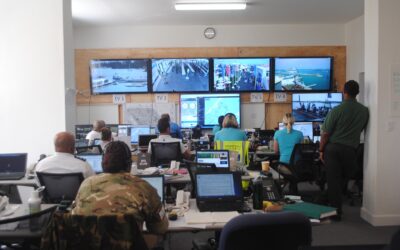
- Control rooms and decision makers tested under realistic conditions
- Learning outcomes captured and revisited over time
- Technology used to support realism and coordination
- Psychological safety that allows teams to challenge assumptions openly
- Post exercise reviews focused on improvement rather than blame
Common mistakes we see
Running exercises purely for compliance
Exercises that exist only to satisfy a requirement rarely produce meaningful learning or behavioural change.
Scenarios that are too predictable
If participants already know what is coming, decision making and adaptability are not truly tested.
Too much complexity too early
Without progressive development, teams can become overwhelmed rather than supported.
Failure to involve the right stakeholders
Key partners are sometimes excluded until late in the process, reducing interoperability and shared understanding.
Over scripting
Highly controlled exercises may achieve objectives on paper while failing to expose genuine operational weaknesses.
Poor capture of lessons identified
Many organisations identify learning points but fail to revisit or embed them into future planning and delivery.
Ignoring human factors
Fatigue, communication breakdown, stress and unclear leadership structures often become the biggest barriers during live incidents.
Practical checklist
- Define clear exercise objectives before designing scenarios
- Identify stakeholders and engage them early
- Clarify command, control and coordination structures
- Test realistic compound risks rather than isolated incidents
- Include communications, decision making and escalation pressures
- Balance scripted content with live play flexibility
- Use scenario injects that challenge assumptions
- Test interoperability between organisations and teams
- Review information sharing and logging processes
- Capture lessons identified and assign ownership for actions
- Revisit learning regularly through ongoing programmes
- Ensure welfare and human performance considerations are included
FAQs
Why are exercises important?
Exercises allow organisations to test plans, communication, leadership and coordination before real incidents occur.
What types of exercises are most effective?
The strongest programmes combine tabletop discussions, live play, simulation and progressive scenario development over time.
How often should organisations exercise?
Exercising should form part of an ongoing resilience programme rather than an isolated annual activity.
What are the biggest barriers to effective exercising?
Common barriers include siloed working, limited resources, poor stakeholder engagement, unrealistic scenarios and failure to embed lessons learned.
How can technology improve exercising?
Technology can support live injects, remote participation, scenario realism and communication, but organisations must also manage information security and reliability risks.
What is the role of human factors?
Human behaviour, stress, fatigue, communication and decision making are often the defining factors during crises and should be central to exercise design.
Controlled Events supports organisations in designing and delivering realistic, engaging and operationally focused exercises that strengthen resilience and preparedness.
From tabletop sessions and live simulations to control room exercising and multi agency coordination, we help teams test plans, improve interoperability and build confidence under pressure.
If your organisation is reviewing its exercising programme or preparing for future operational challenges, please get in touch to discuss how we can support you.